
The Lung–Liver Connection: Why Treating Your Nose Isn't Enough
Part 3 of the Lung–Liver Connection Series
Admin
3/15/20265 min read


Welcome back. If you've been following along, you now know that spring allergies in Chinese medicine aren't just a nasal problem — they're a story about two organ systems, the Lung and the Liver, that are in a very specific and fascinating relationship with each other.
Today, we bring it all together. We're going to look at how these two organs interact, what happens when that relationship gets out of balance, and — this is the part I find most exciting — how acupuncture and Chinese herbal medicine address that imbalance at the root level.
Fair warning: this article gets into some beautiful traditional theory. I'll do my best to make it feel accessible and relevant, not like a textbook. Because once you understand this, you'll never look at spring allergies the same way again.
The Five Element Framework: Metal Meets Wood
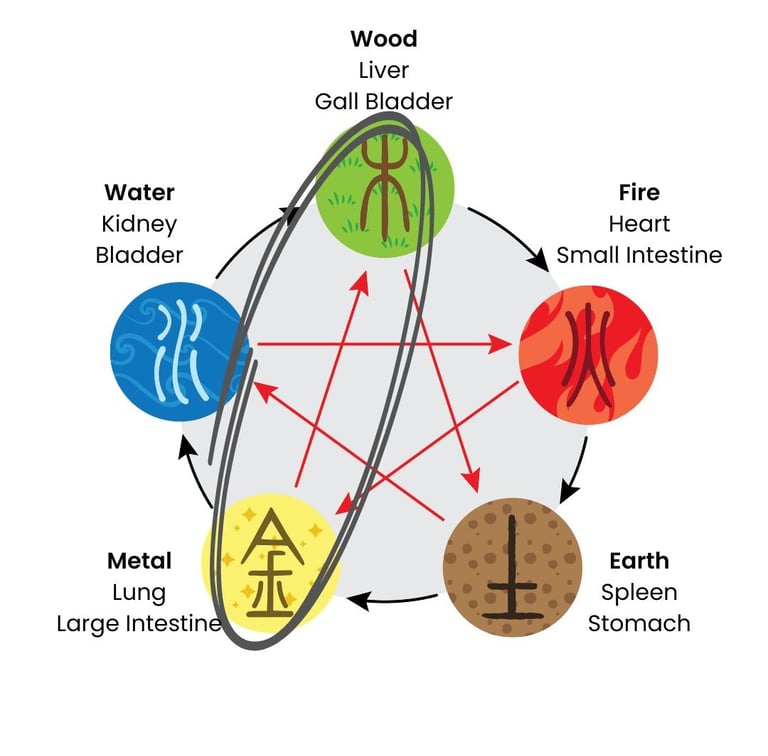
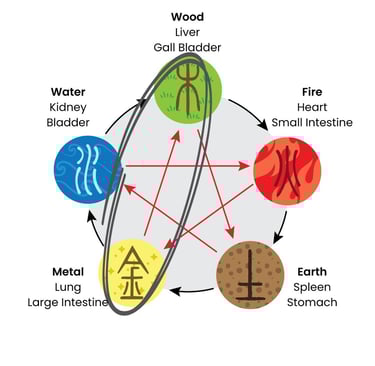
In Chinese medicine, the Five Elements — Wood, Fire, Earth, Metal, and Water — describe the way natural forces interact in cycles. Each element nourishes another and also checks another. Think of it like a beautifully balanced ecosystem: nothing grows unchecked, and nothing stays too still.
The Lung belongs to Metal. The Liver belongs to Wood. And in the Five Element system, Metal controls Wood — meaning the Lung has a natural regulatory relationship with the Liver. When Lung energy is strong, it acts like a gentle governor on the Liver, keeping that rising Wood energy from surging too fast and too forcefully.
But when Lung is weak? That governing function breaks down. The Liver has no counterbalance. Wood surges upward, wind rises, and the allergy cascade begins. In classical Chinese medicine texts, this is sometimes described as "Wood overacting on Metal" — the Liver essentially overwhelming the Lung.
Why This Explains What You Experience
Let me translate that into what this looks and feels like in a real person:
You had a long, stressful fall. Maybe you got sick in November and never quite fully recovered. You've been pushing through winter — work, family, obligations — without enough rest. Your Lung Qi is depleted. Your Wei Qi is thin.
Meanwhile, life hasn't been without frustration. Things at work have been tense. A relationship has been strained. Plans have fallen through. That Liver Qi has been simmering all winter, stagnating a little more with each stressor.
Then March comes. The trees start to bloom. The Liver, doing exactly what it's supposed to do in spring, starts to rise and push outward. But the Lung can't hold the exterior firm, and the Liver has built up too much pressure. The result: an immune system that overreacts to every bit of pollen in the air, a nose that won't stop running, eyes that itch relentlessly, and a level of fatigue that feels completely disproportionate to a little seasonal shift.
This isn't bad luck. It's a pattern. And patterns can be changed.
How Acupuncture Addresses This Pattern
I want to be thoughtful here, because I'm not going to prescribe a point protocol over a blog article — that's what your acupuncture appointment is for, and every person's pattern is unique. But I can share some of the reasoning behind common approaches, because understanding why these points work makes the whole experience more meaningful.
Lung 7 (LU 7)
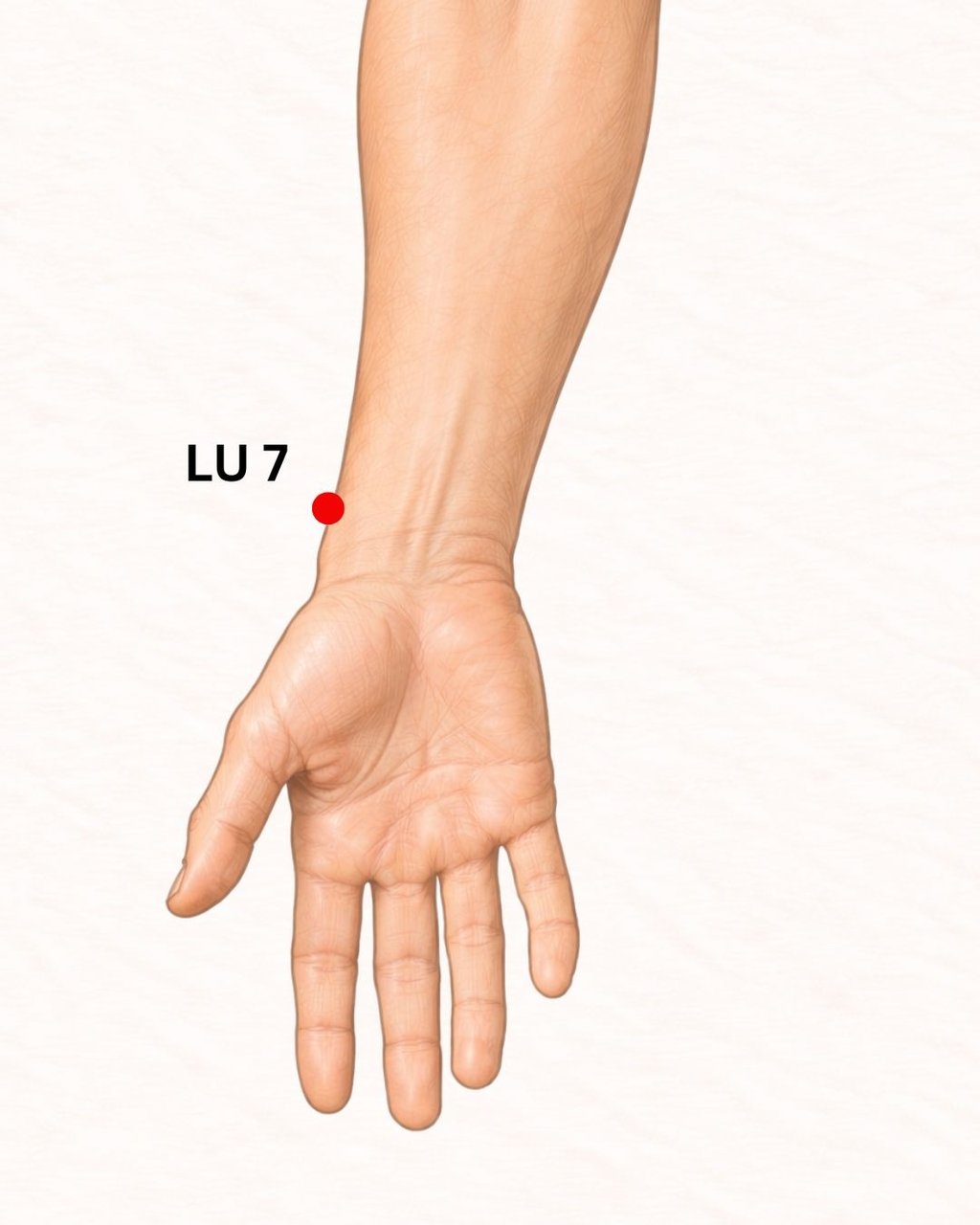
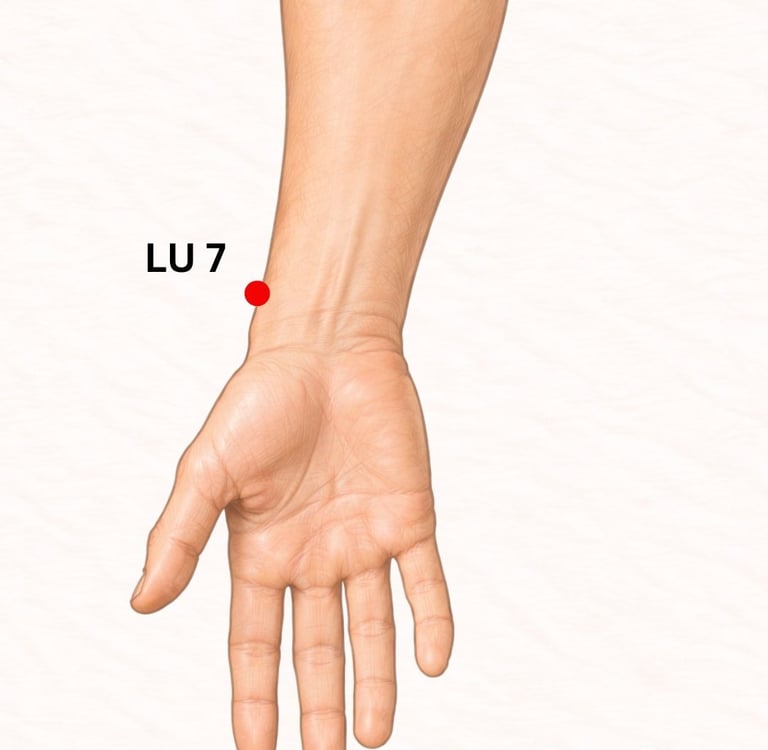
The Command Point of the Lung Meridian.
This point is one of the most powerful for opening the Lung system, releasing the exterior, and strengthening Wei Qi. It's often the first line of support for anyone whose nose and sinuses are taking the hit.
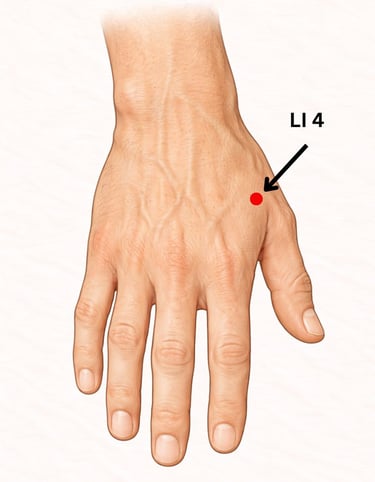
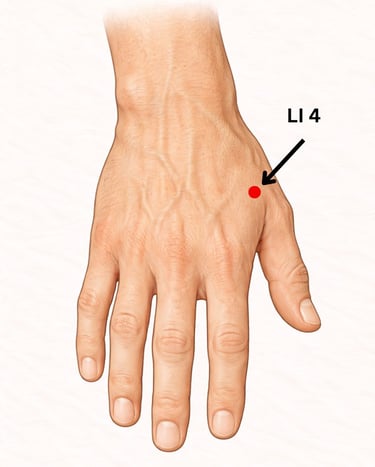
Large Intestine 4 (LI 4)
The Great Eliminator.
Paired with the Lung meridian (they're on the same channel system), LI 4 is exceptional for clearing wind, opening the nasal passages, and supporting the body's ability to expel what doesn't belong. It's also deeply relaxing.
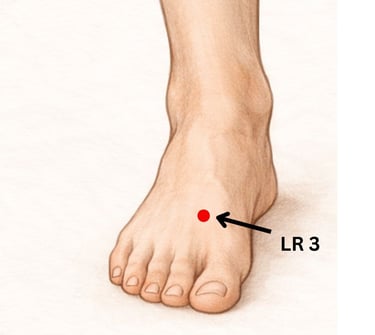
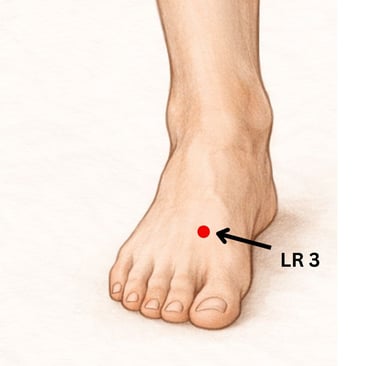
Liver 3 (LR 3)
The Great Rushing.
Located on the top of the foot, this is the primary point for smoothing Liver Qi and calming Liver wind. When Liver 3 and Large Intestine 4 are needled together, the combination is called the "Four Gates" — and it's one of the most classic and effective combinations in Chinese medicine for allergies, stress, and tension of all kinds.
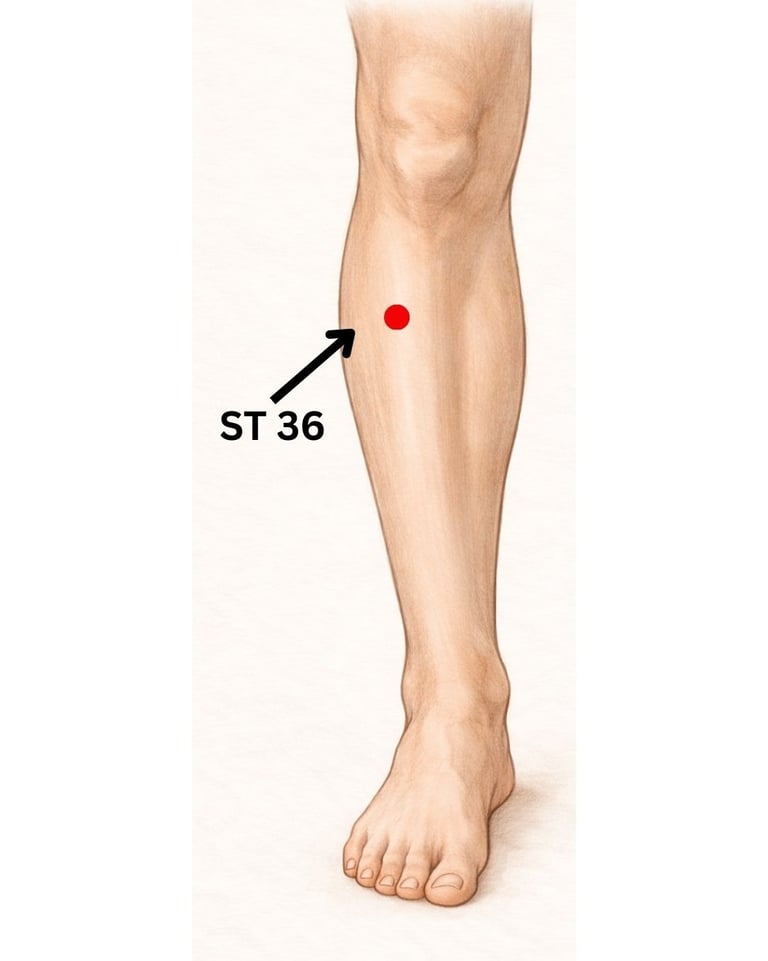
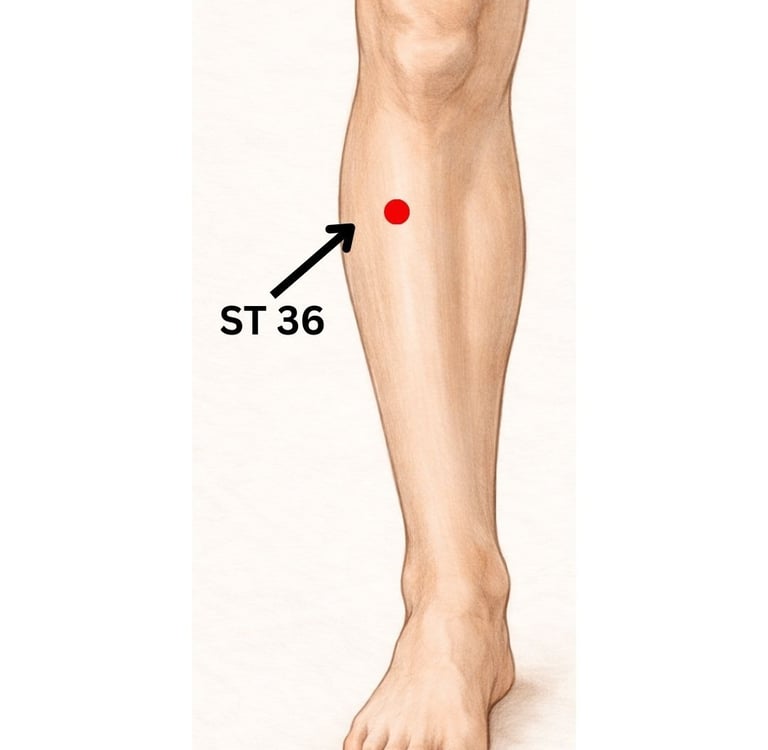
Stomach 36 (ST 36)
Leg Three Miles.
This is the great builder. When Wei Qi is depleted and the body needs resources, ST 36 is the go-to point for rebuilding vitality and supporting the immune system from the ground up.
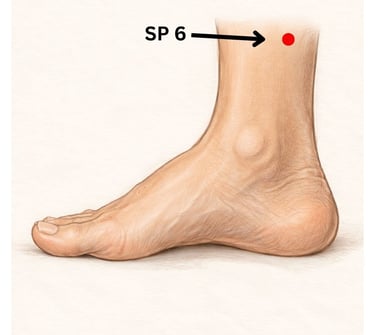
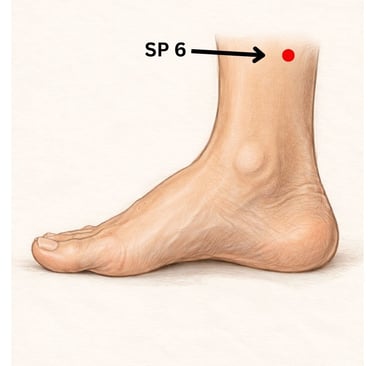
Spleen 6 (Sanyinjiao)
Three Yin Meeting.
This point harmonizes the Liver, Spleen, and Kidney meridians simultaneously — addressing the damp, phlegm accumulation that contributes to congestion while also supporting overall balance.
Chinese Herbal Medicine: Getting to the Root
Acupuncture is powerful, but herbal medicine is often where we see the deepest and most lasting shifts — especially for chronic allergy sufferers. A few classical formulas come up again and again in the context of spring allergies, though I always want to emphasize: PLEASE WORK WITH A LICENSED PRACTITIONER BEFORE STARTING HERBS. This is for informational purposes only and not a recommendation to take these herbs. The right formula depends on your complete pattern, not just your symptoms.
Yu Ping Feng San (Jade Windscreen Formula).
This formula has been used for over 700 years to strengthen Wei Qi and shore up the body's exterior defense. It's often thought of as the Chinese medicine equivalent of a daily immune supplement — excellent for people who catch every bug that comes around or whose allergies seem to reflect a generally low immune response.
Xiao Chai Hu Tang (Minor Bupleurum Decoction).
This is one of the great harmonizing formulas — it works beautifully when the body is caught between interior and exterior, unable to fully resolve an issue. It harmonizes the Lung-Liver relationship and addresses the half-resolved illnesses that often underlie chronic allergy patterns.
Long Dan Xie Gan Tang.
When Liver heat is driving the allergic response — lots of heat sensation, red eyes, intense itching, anger or irritability — this formula clears the excess heat that the Liver is generating. It's not for everyone, but for the right pattern it can be transformative.
When Should You Come In For Acupuncture?
The honest answer: ideally, four to six weeks before your allergy season typically peaks. For most of those in the Pacific Northwest, that means coming in during February or early March. By the time symptoms are raging, we're playing catch-up. Starting early, we're playing a very different game.
A typical pre-season protocol might look like weekly treatments for three to four weeks, then bi-weekly as the season gets underway. Combined with the home support strategies we'll cover in Article 4, this can dramatically reduce — or in some cases hopefully resolve — seasonal allergy symptoms.
Download Your Free
Spring Allergy Season Prep Checklist
Download your free Spring Allergy Season Prep Checklist here and join my email community where I share monthly tips on seasonal living, acupuncture wisdom, and practical ways to stay balanced year-round.
© 2026. All rights reserved.


Find Me
Email: contact@sashadewsnup.com
Phone: 503-498-5665
Address: 1561 Columbia Blvd, St Helens, OR
Hours: Thursday and Friday, 9 AM to 4 PM
Cash-pay - Superbills available
Credentialing: Moda & BCBS
Sasha Dewsnup, DAaCHM, LAc, CTRS, CCLS
Chinese medicine for nervous system regulation, maternal recovery, and structural pain — serving St. Helens and the Columbia River Valley.