Scoliosis and Chinese Medicine — What My Doctoral Research Found
June is Scoliosis Awareness Month. As someone who has lived with scoliosis and spent years researching it, I want to share what I found — and why Chinese medicine has something meaningful to offer that standard orthopedic care often doesn't.
STRUCTURAL CARE & SCOLIOSIS
Admin
6/7/20268 min read
June is Scoliosis Awareness Month, and there is no topic closer to my heart — or my spine.
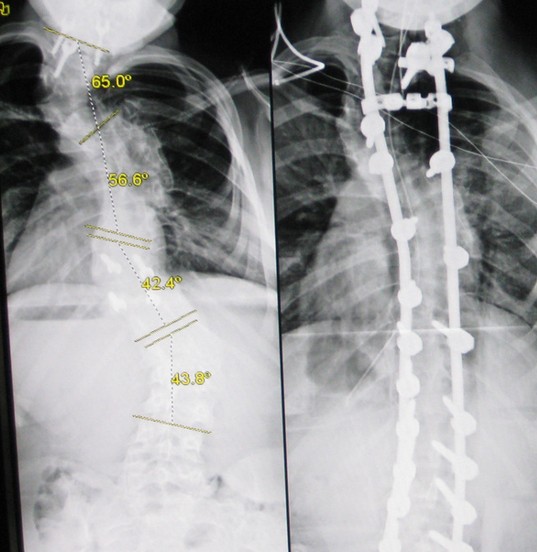
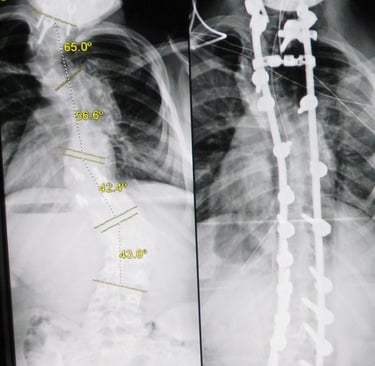
I was diagnosed with scoliosis when I was 5 years old. I watched my spine curve on X-rays as I grew, felt the asymmetry in my own body, and spent years navigating a medical system that had one answer for a complex problem: watch and wait, or intervene surgically. The only one asking why my spine had curved in the first place or what else might be done about it was my mother. And that’s how she discovered Chinese medicine. I would not be where or who I am today without her.
That question became the thread I followed all the way through my doctoral training. My capstone research at the National University of Natural Medicine — “Approaching Adolescent Idiopathic Scoliosis Holistically: A Guide for Chinese Medical Practitioners” — was my attempt to answer it as completely as I could, drawing on classical Chinese medicine, modern research, somatic methodologies, and years of clinical study. I am now bringing that work directly into my practice, which I am opening this month here in the Columbia River Valley.
This post is a glimpse into what I found.
Scoliosis is defined as a lateral curvature of the spine measuring at least 10 degrees on a Cobb angle — the standard radiographic measurement used by orthopedic medicine. The spine can curve left (levoscoliosis), right (dextroscoliosis), or in multiple directions, and can also rotate in a corkscrew pattern through the vertebral column (1,2).
The most common form — comprising about 80% of all cases — is Adolescent Idiopathic Scoliosis (AIS), which develops between ages 10 and 18 (3). The word idiopathic means “arising from an obscure or unknown cause” (4). In other words, Western medicine acknowledges it does not fully understand why it happens.
What the research does show is that the condition is significantly more prevalent in females, particularly as curve severity increases. For every male with a curve of 30 degrees or greater, there are approximately ten females with curves of the same magnitude (5,6).
Those statistics are not just clinical abstractions to me. They’re the lived reality of the people I went to school with, treated in clinic, and see reflected in my own body.
What is Scoliosis and Why Does it Happen?
What Does Chinese Medicine Have to Say That Western Medicine Doesn’t?
Western orthopedics approaches scoliosis primarily as a structural problem: the spine has deviated, so we must straighten it through bracing, tethering, or surgery. These interventions can be necessary and life-changing. But they treat the deviation itself, not the body that produced it.
Chinese medicine begins one layer deeper: with the premise that all things exist energetically before they exist physically. If the structure has shifted, something upstream has shifted first. The question is what.
My research identified at least nine interconnected body systems that contribute to scoliotic curvature in ways standard orthopedic treatment does not address:
Meridians and Qi flow — The Governing Vessel (Du Mai) runs directly through the spine. When its Qi is disrupted or deficient, the spine curves with it. The Bladder, Kidney, Gall Bladder, Conception Vessel, and several other meridians all directly touch or influence the spinal column (7.8.9).
Biotensegrity — The body holds itself in balance through tensional integrity: when one muscle becomes hypertonic (tight), surrounding structures shift to compensate. On a scoliotic spine, the concave side is typically hypertonic, the convex side hypotonic. These imbalances travel along predictable fascial pathways (10,11,12).
Fascia — The body’s continuous connective tissue web links distant structures in the body. Tension in the foot can influence the thoracic spine. My research drew heavily on Thomas Myers’ Anatomy Trains framework, which maps these myofascial lines and finds striking parallels with classical Chinese meridian pathways (12).
The vestibular system — Research has shown that adolescents with idiopathic scoliosis have measurably altered vestibular-evoked postural responses (13,14). The inner ear controls proprioception and balance. When its signals are disrupted, the body compensates structurally — often through spinal curves.
Hormones — Estrogen, growth hormone, melatonin, leptin, and ghrelin have all been implicated in the onset or progression of AIS (15,16,17,18,19). Melatonin deficiency in particular has been shown to produce scoliotic curves in animal studies. This is deeply interesting through a Chinese medicine lens, where the Kidney system governs bones and hormonal rhythms.
Emotions and the nervous system — Research has documented significantly elevated rates of anxiety, depression, and body image distress in adolescents with scoliosis (20,21). In classical Chinese medicine, unresolved emotional patterns are understood to lodge in the body’s structure over time. A spine that has been curving since adolescence has been carrying that load for years.
My research synthesized both passive and active treatment approaches drawn from Chinese medicine, somatic therapies, and integrative bodywork — many of which are rarely used together in clinical practice. Here is a condensed overview of what I found to be most promising for AIS:
Energetic approaches
Acupuncture on the Du Mai, Bladder, and Kidney meridians directly addresses the energetic foundation of the spine. Specialized systems like Master Tung acupuncture include specific point groupings (“Daoma” needle clusters) that target spinal curvature from distal points on the hands and feet. Fire Dragon Moxibustion — a warm needle technique applied along the spine — can penetrate deeply into the paraspinal muscles and fascia, promoting Qi and Blood circulation through the most affected tissues (22,23,24).
Auricular acupuncture (ear acupuncture) has been studied for both pain management and postural correction, with preliminary evidence supporting its use as an adjunct for spinal conditions (25,26).
Neurological and somatic approaches
Sotai Ho — a Japanese somatic movement therapy — works by moving the body in its most comfortable direction first, then releasing. It is one of the most elegantly simple approaches I encountered for addressing asymmetrical muscle patterns without forcing the body into painful ranges of motion (27,28).
Vestibular Rehabilitation Therapy addresses the inner ear dysfunction that research increasingly links to idiopathic scoliosis. It is a largely overlooked component of conservative scoliosis management and one I find particularly compelling given the strength of the vestibular research (29).
Motor point acupuncture targets specific neuromuscular junctions to directly modulate hyper- and hypotonic muscle patterns along the spine — reaching the structural imbalance through its neurological root (30,31).
Musculoskeletal approaches
Myofascial release along the Superficial Back Line, Superficial Front Line, and Spiral Line (as described in Anatomy Trains) directly addresses the tensional imbalances that pull the spine off-center (12,32).
The Schroth Method — a curve-specific exercise system developed by Katharina Schroth — has the strongest evidence base among conservative exercise approaches for AIS, and pairs beautifully with Chinese medicine treatment as the active component of an integrative plan (33,34,35).
Rotational Angular Breathing (RAB) uses intentional breath patterns to gently expand the compressed side of the rib cage and reduce rotational asymmetry — addressing the structural curve through the respiratory system (36).
What Does Treatment Look Like WHen it Addresses All of This?
Why This Matters, Especially for Families?
Most people with scoliosis — especially adolescents and their parents — are told they have two options: watch it, or fix it surgically. The space between those options can feel like a vast, empty waiting room.
What my research found is that this space is actually full of possibility. There are evidence-informed, non-invasive, holistic approaches that Chinese medicine has long offered and that modern research is beginning to validate. They require time, consistency, and a practitioner who understands how to work with the whole person rather than just the curve.
I have personal experience on both sides of this relationship — as someone who has lived with scoliosis and as a practitioner trained to treat it. That dual vantage point shapes how I approach every scoliosis patient who walks through my door.
If you or someone you love has a scoliosis diagnosis and you are looking for support beyond “wait and see,” I would love to talk with you. My practice is now open in St. Helens, and structural care is one of my three core clinical focuses.
You deserve more than “wait and see.”
I am now accepting new patients for acupuncture in St. Helens, OR. If you’re living with scoliosis and want a practitioner who will look at the whole picture — not just the curve — let’s talk.
Book your first visit or join my waitlist at sashadewsnup.com. I would love to work with you.
Resources
Books, Tools, and Support for Living Well with Scoliosis
Books on Scoliosis
Anatomy Trains by Thomas Myers — the myofascial meridian framework referenced in my research
The Web That Has No Weaver by Ted Kaptchuk — foundational Chinese medicine theory
Posture & Movement Tools
Foam roller for paraspinal myofascial release along the Superficial Back Line
Scoliosis posture mirror — for home Schroth practice and postural awareness
Resistance bands for curve-specific Schroth and core stabilization exercises
Further Support
Scoliosis Research Society patient resources: srs.org
Schroth Method practitioner finder: SOSORT directory
My practice (now open): sashadewsnup.com
This post contains affiliate links. I may earn a small commission at no extra cost to you. I only recommend things I genuinely believe in.
References
From: Dewsnup, A.B.S. (2025). Approaching Adolescent Idiopathic Scoliosis Holistically: A Guide for Chinese Medical Practitioners. Capstone Project, National University of Natural Medicine. Capstone Chair: Kenneth Glowacki, DACM, LAc.
Scherl SA, Hasley BP. Adolescent idiopathic scoliosis: Management and prognosis. UpToDate. Updated November 27, 2024.
Vizniak NA. Spinal Manual. 2nd ed. Professional Health Systems, Inc.; 2018.
Scoliosis. American Association of Neurological Surgeons. April 30, 2024.
Idiopathic. Merriam-Webster.com. Accessed 2025.
Scoliosis. American Association of Neurological Surgeons. April 30, 2024.
Scherl SA, Halsey BP. Adolescent idiopathic scoliosis: Clinical features, evaluation, and diagnosis. UpToDate. Updated September 5, 2024.
Fruehauf H. Annotated notes from CM 611 Cosmology and Symbolism I; Fall 2021, Portland, OR.
Yuan J. The 8-Extraordinary Vessels (Qi Jing Bai Mai). Transcribed by Isabella NV; Winter/Spring 2004.
Bing W. (Trans. Liansheng Wu). Yellow Emperor’s Canon of Internal Medicine. China Science & Technology Press; 2010.
Myers TW. Anatomy Trains: Myofascial Meridians for Manual Therapists and Movement Professionals. 4th ed. Elsevier; 2020.
Fuller B. Tensegrity. Portf Artnews Annu. 1961;4:112–127.
Levin S. Tensegrity, the new biomechanics. In: Hutson M, Ward A, eds. Oxford Textbook of Musculoskeletal Medicine. Oxford University Press; 2015:155–160.
Hawasli AH, Hullar TE, Dorward IG. Idiopathic scoliosis and the vestibular system. Eur Spine J. 2015;24(2):227–233.
Pialasse JP, et al. The Vestibular-Evoked Postural Response of Adolescents with Idiopathic Scoliosis Is Altered. PLoS One. 2015;10(11):e0143124.
Zheng S, et al. Estrogen promotes the onset and development of idiopathic scoliosis via disproportionate endochondral ossification. Exp Mol Med. 2018;50(11):1–11.
Brinkman JE, Tariq MA, Leavitt L, et al. Physiology, Growth Hormone. StatPearls. Updated May 1, 2023.
Machida M, et al. Melatonin. A possible role in pathogenesis of adolescent idiopathic scoliosis. Spine. 1996;21:1147–1152.
Tam EMS, et al. Lower Muscle Mass and Body Fat in Adolescent Idiopathic Scoliosis Are Associated With Abnormal Leptin Bioavailability. Spine. 2016;41(11):940–946.
Yu HG, et al. High Ghrelin Level Predicts the Curve Progression of Adolescent Idiopathic Scoliosis Girls. Biomed Res Int. 2018;2018:9784083.
Payne WK 3rd, et al. Does scoliosis have a psychological impact and does gender make a difference? Spine. 1997;22(12):1380–1384.
Fruehauf H. All Disease Comes From the Heart: The Pivotal Role of the Emotions in Classical Chinese Medicine. ClassicalChineseMedicine.org; 2006.
Maher JH. Advanced Tung Style Acupuncture: The Dao Ma Needling Technique of Master Tung Ching-Chang. RBC; 2005.
Deng H, Shen X. The mechanism of moxibustion: ancient theory and modern research. Evid Based Complement Alternat Med. 2013;2013:379291.
Weiss HR, et al. Acupuncture in the treatment of scoliosis — a single blind controlled pilot study. Scoliosis. 2008;3:4.
Nogier R. History of Auriculotherapy: Additional Information and New Developments. Med Acupunct. 2021;33(6):410–419.
Moura CC, et al. Auricular acupuncture for chronic back pain in adults: systematic review and metanalysis. Rev Esc Enferm USP. 2019;53:e03461.
Archibald R. What is Sotai Ho? Seitai Shinpo Foundation for Japanese Structural Acupuncture. seitaishinpoacupuncture.com; 2025.
Hashimoto K. (Trans. Herman Aihara). Sotai Natural Exercise. George Ohsawa Macrobiotic Foundation; 1981.
Simoneau M, et al. Evidence for cognitive vestibular integration impairment in idiopathic scoliosis patients. BMC Neurosci. 2009;10:102.
Callison M. Motor Point Index: An Acupuncturist’s Guide to Locating and Treating Motor Points. Matt Callison; April 24, 2012.
Blin R. Presented as a continuing education course, 2019, Portland, OR.
López-Torres O, et al. Effects of myofascial release on lower back pain in idiopathic scoliosis. J Bodyw Mov Ther. 2021;27:16–25.
Dimitrijević V, et al. Treatment of Adolescent Idiopathic Scoliosis with the Conservative Schroth Method. Healthcare (Basel). 2025;13(6):688.
Wang Z, et al. Laser acupuncture combined with Schroth therapy on adolescent idiopathic scoliosis. Pak J Med Sci. 2024;40(6):1174–1179.
Liu X, et al. The efficacy of core stabilization exercise in mild and moderate AIS: systematic review and meta-analysis. J Orthop Surg Res. 2025;20:214.
Lehnert-Schroth C. Three-Dimensional Treatment for Scoliosis: A Physiotherapeutic Method for Deformities of the Spine. Martindale Press; 2007. [Source of Rotational Angular Breathing methodology as developed by Katharina Schroth.]
© 2026. All rights reserved.
Find Me
Email: contact@sashadewsnup.com
Phone: 503-498-5665
Address: 1561 Columbia Blvd, St Helens, OR
Hours: Thursday and Friday, 9 AM to 4 PM
Cash-pay - Superbills available
Credentialing: Moda & BCBS
Sasha Dewsnup, DAaCHM, LAc, CTRS, CCLS
Chinese medicine for nervous system regulation, maternal recovery, and structural pain — serving St. Helens and the Columbia River Valley.