
Can’t Sleep Even When You’re Exhausted? - A Chinese Medicine Explanation
If exhaustion and sleeplessness are living in the same body at the same time, Chinese medicine has a name for that — and a reason. Here's what your Heart and Shen are trying to tell you.
NERVOUS SYSTEM
Admin
6/14/20265 min read


You’re so tired you can barely keep your eyes open at dinner. You finally lie down. And then — nothing.
Your mind starts its second shift. You replay the conversation from this afternoon, wonder if you said the wrong thing, remember the appointment you forgot to reschedule, feel the low hum of worry you can’t quite name. Your body is spent. Your brain refuses to rest.
If this sounds familiar, you are not broken, and you are not alone. This pattern — bone-deep exhaustion paired with an inability to actually sleep — has a name in Chinese medicine. And more importantly, it has a reason.
As an acupuncturist opening my practice this month here in St. Helens, this is one of the most common things I hear from people before their first visit. As a new mother myself, I’ve lived it too. So let me share what Chinese medicine understands about this frustrating, exhausting loop — and what we can do about it.
What does Chinese medicine say about sleep?
In Western medicine, sleep is largely viewed as a neurological event — melatonin rises, cortisol drops, your brain cycles through stages. It’s a biological sequence that should happen automatically when you’re tired enough.
Chinese medicine sees it differently. Sleep is not just something your brain does. It is something your Heart governs.
In Chinese medicine, the Heart is the home of the Shen — which roughly translates as “spirit” or “mind.” Your Shen is your consciousness, your awareness, your inner emotional life. During the day, your Shen is active and outwardly engaged. At night, it needs a safe, calm place to rest and settle. That place is the Heart.
When the Heart is healthy and nourished, the Shen settles easily at night. Sleep comes. Rest is deep.
When the Heart is depleted, overheated, or disturbed — the Shen becomes restless. It wanders. And that wandering is what you experience as lying awake with a spinning mind.
Why does this happen more in summer?
We are in Fire season — summer in Chinese medicine. The Fire element governs the Heart and the Small Intestine, and it carries the energy of heat, expansion, and connection. It is the season of joy, long days, and outward living.
Fire season is beautiful. But it can also be overstimulating. Longer daylight means more sensory input, more activity, more emotional processing. The Heart is already working harder than it does in quieter seasons. If there is any underlying depletion — if you have been running on empty, giving more than you are receiving, carrying stress you have not had time to metabolize — summer has a way of making that visible.
The Heart’s emotion is joy, but its shadow side is anxiety. When Heart Qi is depleted or its fire is burning too hot, what shows up is not contentment — it is overthinking, emotional overwhelm, and the particular kind of tired-but-wired that so many people experience this time of year.
What are the signs that your Heart Qi or Heart Yin may be depleted?
Difficulty falling asleep, especially when you feel exhausted
Waking between 11pm–1am (related to the Heart’s time on the Chinese medicine body clock)
Vivid, disturbing, or emotionally exhausting dreams
Heart palpitations, especially when lying down or at rest
Feeling anxious or unsettled without a clear reason
A restless, “busy” mind that won’t quiet — especially at night
Night sweats or feeling hot in the evenings
Emotional sensitivity or feeling close to tears more than usual
Does any of that list feel uncomfortably familiar? For many people — and especially for mothers who are caring for young children, carrying the invisible mental load, and not sleeping deeply regardless of how tired they are — this pattern is chronic, not occasional.
How does acupuncture help with sleep?
Acupuncture works by regulating the flow of Qi (energy) through the body’s meridian system. When the Heart is depleted or overheated, specific acupuncture points are used to gently calm and nourish it — quieting what Chinese medicine calls “Empty Heat” and giving the Shen a calmer place to land at night.
This is not sedation. It is regulation. Acupuncture works with your nervous system, not against it — gently downshifting the fight-or-flight response that keeps so many of us stuck in sympathetic overdrive long after the day is over.
In practice, many patients notice changes in sleep quality within two to four weeks of consistent treatment. Some notice a shift after a single session — a quieter mind, a heaviness in the body that finally feels like it’s allowed to rest.
What can I do at home while I’m waiting to start treatment?
1. Protect the hour before bed.
Your Shen does not distinguish between real and digital stress. Scrolling through emotionally activating content right before sleep gives your Heart more to process at exactly the wrong time. Blue-light glasses and a firm screen boundary at 9pm can genuinely help.
2. Nourish with warmth, not stimulation.
Calming herbal teas in the evening — chamomile, passionflower, lemon balm, or blends formulated for sleep — support Heart Yin and signal the nervous system that the day is ending.
You deserve rest — not just the appearance of it.
There is a particular kind of exhaustion that comes from years of almost sleeping — of waking unrested, of lying awake counting the hours left before morning. It wears on you in ways that go beyond tired. It touches your mood, your patience, your sense of yourself.
Chinese medicine offers something Western sleep medicine often does not: an explanation for why your particular version of sleeplessness is happening, and a treatment approach that addresses the root, not just the symptoms.
I am now welcoming new patients at my practice inside Well Within here in the Columbia River Valley. If you have been exhausted-but-wired for too long, I would love to sit with you and figure out what your body is actually asking for.
Sleep is not a luxury. It is medicine.
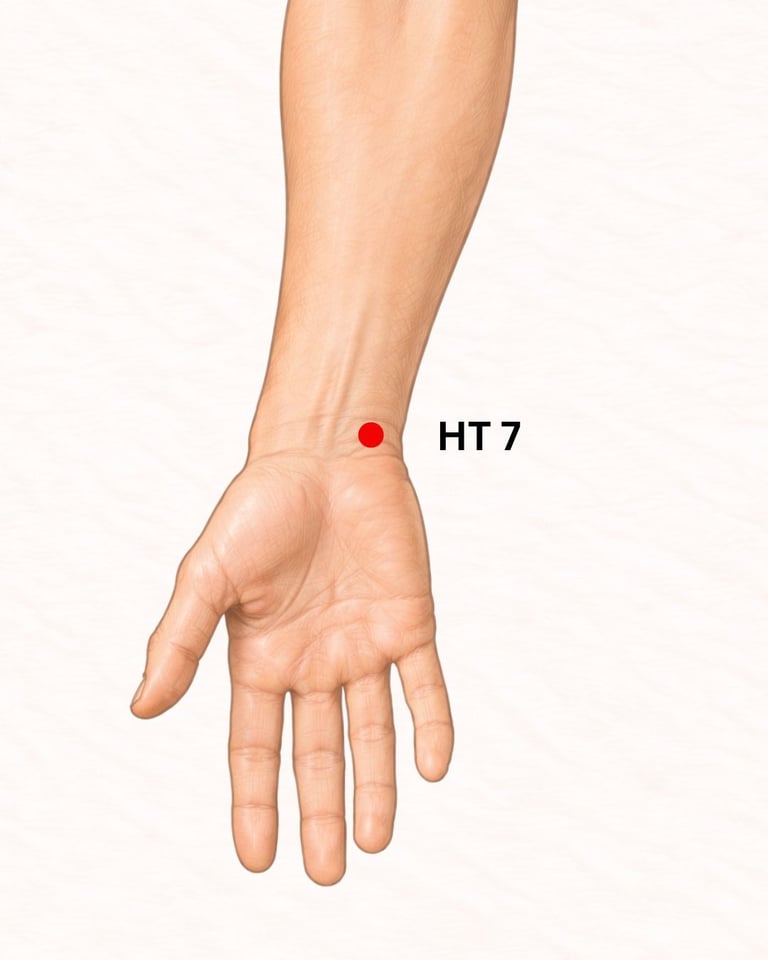
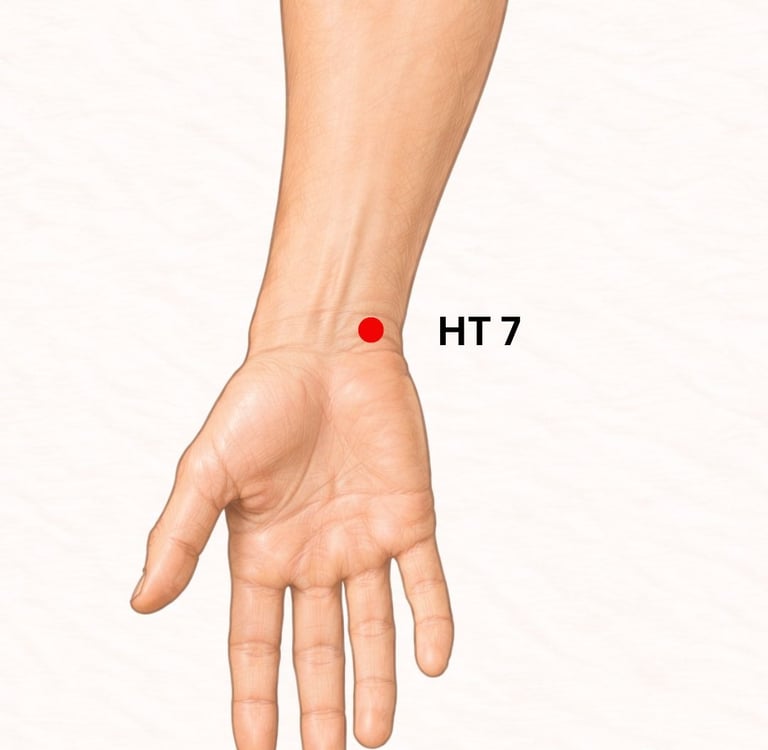
3. Try the acupressure point Heart 7 (HT 7, Shen Men).
This is one of the most powerful points on the body for calming an anxious mind. It sits on the crease of your wrist, on the pinky side, just inside the small tendon you can feel there. Press and hold gently for 60–90 seconds on each side before bed while breathing slowly.
4. Get quiet before you get horizontal.
A few minutes of slow breathing, light stretching, or simply sitting in a dim room with a cup of tea before you get into bed gives your Shen time to begin settling before your head hits the pillow.
Ready to sleep — really sleep?
I am now accepting new patients for acupuncture in St. Helens, OR. My practice is built around helping you restore from the inside out — nervous system first.
Book your first visit or join my waitlist at sashadewsnup.com.
Resources
Tools & Reading to Support Your Sleep
Calming Teas
Celestial Seasonings Sleepytime Extra Tea (This is my favorite brand of tea!)
Blue-Light Glasses
Blue-light blocking glasses for evening screen use
Sleep Support Tools
Acupressure mat for evening wind-down
White noise machine or sleep sound device
Further Reading
The Web That Has No Weaver by Ted Kaptchuk — foundational guide to Chinese medicine
Why We Sleep by Matthew Walker — the Western science of sleep
This post contains affiliate links. I may earn a small commission at no extra cost to you. I only recommend things I genuinely believe in.
© 2026. All rights reserved.


Find Me
Email: contact@sashadewsnup.com
Phone: 503-498-5665
Address: 1561 Columbia Blvd, St Helens, OR
Hours: Thursday and Friday, 9 AM to 4 PM
Cash-pay - Superbills available
Credentialing: Moda & BCBS
Sasha Dewsnup, DAaCHM, LAc, CTRS, CCLS
Chinese medicine for nervous system regulation, maternal recovery, and structural pain — serving St. Helens and the Columbia River Valley.