
Supporting Your Body Through the Holiday Season
Discover specific foods, herbs, and acupressure points that support your body's resilience during busy weeks—including why warm foods matter more than you think and three powerful points to press when you're running on fumes.
Admin
12/14/20257 min read


***This page contains affiliate links, which means I may earn a small commission if you make a purchase — at no extra cost to you. I only recommend products I personally use or trust.***
We've talked about why the holidays deplete us and how to plan your season intentionally. Today we're getting practical about supporting your body physically through weeks that inevitably ask more than usual.
Even with careful planning, December is still December. There will be late nights, rich foods, emotional demands, and schedule disruptions. The goal isn't to avoid all stress—that's impossible. The goal is to give your body the support it needs to stay resilient when demands are high.
Food as Medicine During Busy Weeks
In Chinese medicine, the Spleen and Stomach are responsible for transforming the food we eat into Qi—the usable energy that fuels everything else. When these organs are strong and supported, we have reserves to draw on. When they're weakened, everything else struggles.
The holidays are particularly hard on the Spleen. Irregular eating times, too much sugar, cold foods, rushed meals eaten standing up or while driving—all of these weaken the Spleen's ability to do its job.
What Actually Supports Spleen Qi
Warm Foods Over Cold
This is the single most important principle. Your digestive system works like a pot of soup simmering on a stove—in Chinese medicine, this is called your "digestive fire." When you eat cold food, your body has to spend energy warming it up before it can even begin breaking it down.
During a season when energy is already stretched thin, this extra demand adds up.
Choose:
Warm or room-temperature foods over cold ones
Cooked vegetables over raw salads
Warm drinks over iced beverages
Foods fresh from the oven over things straight from the fridge
Even something as simple as letting your yogurt sit at room temperature for 20 minutes before eating it makes a difference.
Soups and Broths
These are some of the most nourishing foods you can eat during busy times. They're warm, easy to digest, hydrating, and can be made ahead in large batches.
I keep a constant rotation of soups going in December—chicken soup, vegetable soup, beef stew, miso soup, bone broth. On days when I'm too tired to cook, I heat up soup. On days when the kids and I are overwhelmed, we drink warm broth in a mug. It's my secret weapon for keeping everyone's Spleen Qi stable.
Avoid Damp-Producing Foods
In Chinese medicine, certain foods create "dampness" in the body—a heavy, sluggish, foggy quality that makes everything harder. The main culprits are:
Fried foods
Excessive dairy
White sugar
Highly processed foods
Too much raw, cold food
I'm not saying never eat Christmas cookies or party appetizers. I'm saying notice what happens when you eat too many of these foods too often. The brain fog, the sluggish digestion, the general feeling of heaviness—that's dampness accumulating.
Cooked Vegetables Are Your Friend
I know raw veggie platters are a holiday party staple, but cooked vegetables are so much easier to digest and more nourishing to Spleen Qi.
Roasted root vegetables, sautéed greens, vegetable soups—these provide nutrients in a form your body can actually access without working overtime.
Herbs and Teas for Resilience
There are a few simple herbs that I keep on hand during the holidays specifically for their ability to support energy and resilience.
Ginger Tea
Ginger is warming, supports digestion, and helps move Qi when it gets stuck (which happens constantly during busy, stressful times). I keep fresh ginger root in the fridge and slice a few pieces into hot water whenever someone's stomach is upset or energy is flagging.
Add honey if you want sweetness, lemon if you want brightness. When ginger tea is too strong, I add some slices of onion to the pot. You don’t taste them, but they tamper down the strong ginger taste and add extra immune-supporting vitamins. Drink it warm, sip it slowly.
The ginger tea I keep on hand: I buy organic fresh ginger root in bulk and keep it in the freezer—it grates easier when frozen and lasts months.
Jujube Dates (Hong Zao)
These are sweet dried fruits used extensively in Chinese medicine to tonify Qi and calm the Shen (spirit). They're particularly good for the kind of depletion where you feel simultaneously wired and exhausted.
You can eat them plain (they taste like a cross between a date and an apple), or simmer them in tea. I often combine jujube, ginger, and a cinnamon stick for a warming, nourishing tea that supports both energy and emotional balance.
For jujube dates: These Chinese red dates are the ones I like. They're exactly what you'd find in a Chinese herb shop but delivered to your door.
Chamomile
While not traditionally Chinese, chamomile is excellent for calming the nervous system and supporting sleep—both of which tend to suffer during the holidays.
I love chamomile tea before bed to unwind from holiday activities. It works remarkably well at helping them settle.
Acupressure Points for Stress and Depletion
When you're running on fumes but still have things to do, these three acupressure points can provide real support. They're simple enough to use on yourself, and I find myself pressing them constantly during December.
The Reality Check We All Need
Here's what I want you to hear: even with perfect food choices, herbs, and acupressure, you might still feel depleted during the holidays. These practices help—genuinely help—but they're not magic shields against exhaustion.
If you're doing too much, no amount of ginger tea will make up for it. The real medicine is the planning we talked about in the last article: saying no, protecting rest time, choosing what actually matters.
These physical supports are tools to help you stay resilient within reasonable limits. They're not permission to keep overextending and expect your body to just keep up.
Think of it like this: if you're constantly overdrawing your bank account, occasionally depositing $20 helps, but it doesn't solve the fundamental problem of spending more than you have.
These practices are the $20 deposits. They matter. They help. But the real solution is adjusting your spending to match your income.
Making It Manageable
You don't need to implement all of these practices. Choose one or two that seem doable and start there.
Maybe you just focus on eating warm foods and drinking ginger tea. Maybe you just commit to pressing Kidney 1 before bed every night. Maybe you keep a thermos of soup available so you always have something nourishing on rushed days.
Small, consistent practices add up. One warm meal a day is better than none. One minute of acupressure is better than no support at all.
Meet yourself where you are, with the capacity you have, and do what you can.
What About the Kids?
Everything I've shared applies to children too, often even more so. Their systems are still developing and get dysregulated more easily.
In the next article, I'm going to talk specifically about protecting your children's Qi during the holidays—how to manage overstimulation at gatherings, maintain predictable rhythms in chaotic weeks, and give them tools to regulate themselves when everything around them is activating.
Because when kids are regulated, parents can breathe. And when parents are regulated, kids feel safer. It's all connected.
Next in this series: Protecting your children's Qi through the holiday season—practical strategies for managing overstimulation, maintaining rhythms, and helping kids stay grounded when everything around them is chaotic.
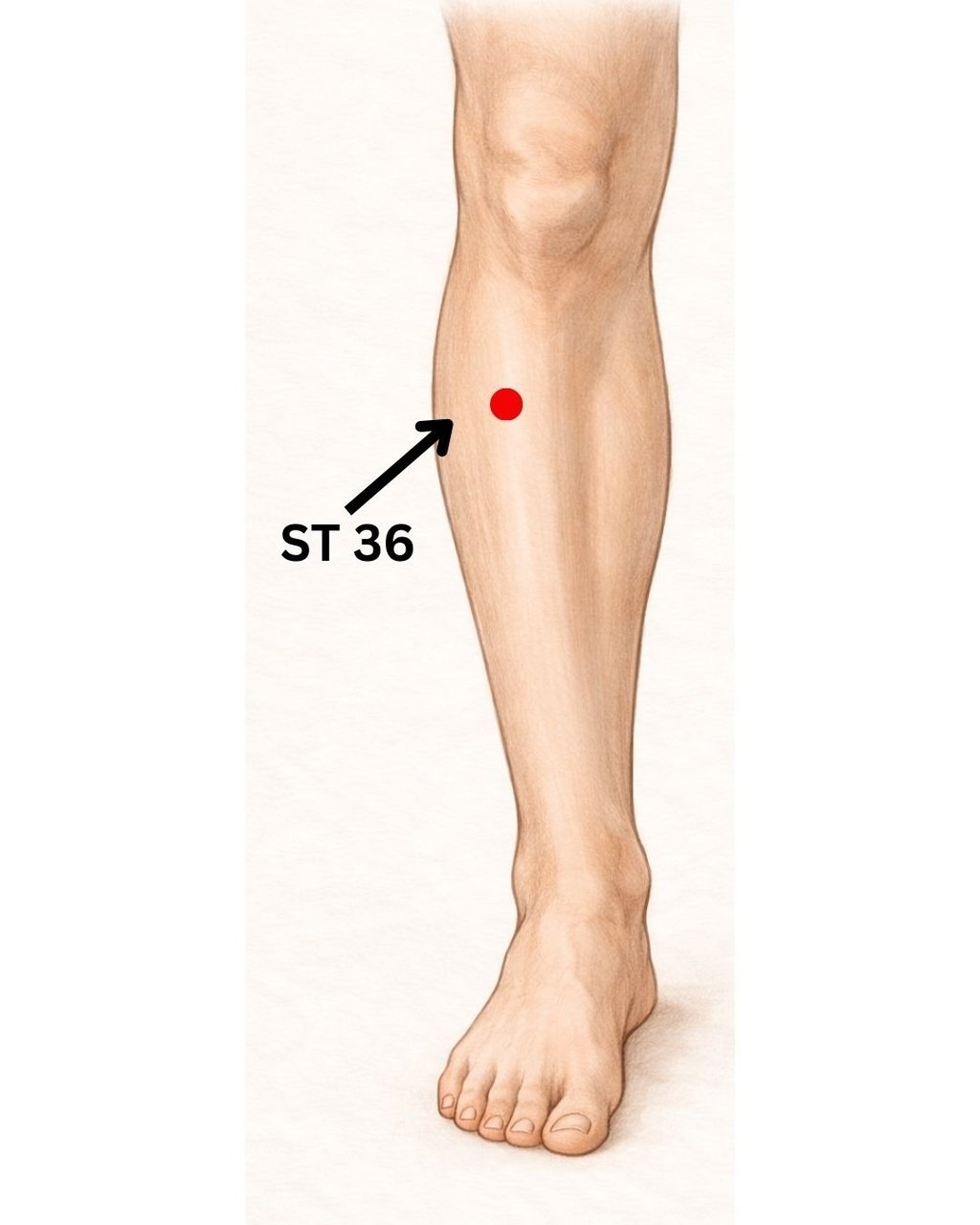
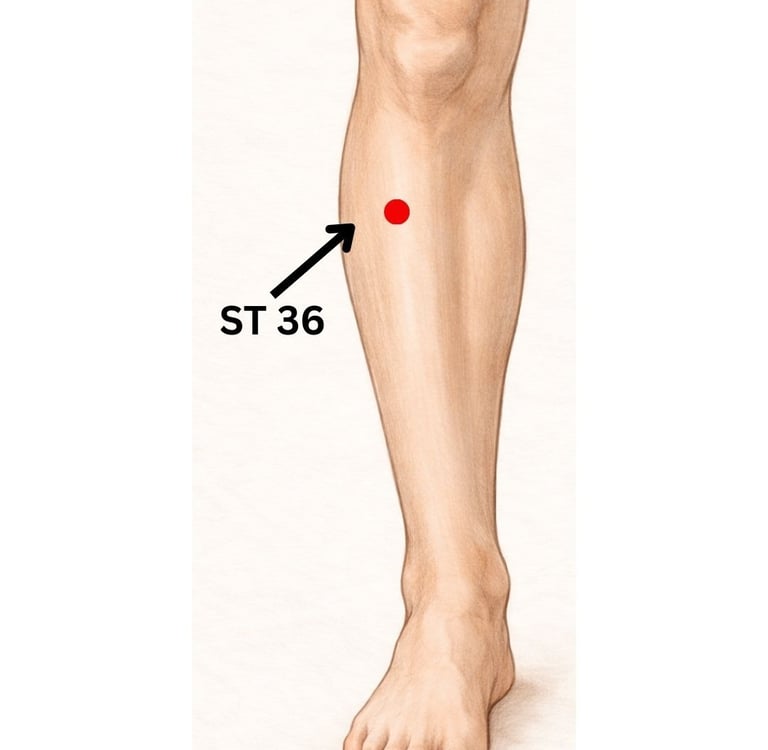
Stomach 36 (Zusanli - "Leg Three Miles")
Located four finger-widths below the kneecap, one finger-width to the outside of the shin bone.
The Chinese name means "Leg Three Miles"—the idea being that stimulating this point gives you energy to walk three more miles when you thought you were done. It's excellent for general fatigue, supporting the immune system, and strengthening digestive function.
You can press it, massage it, or even warm it with a heating pad or moxa. Even keeping a hand warmer handy (pun intended) in your pocket during cold weather and holding it to this point can provide a big energy boost.
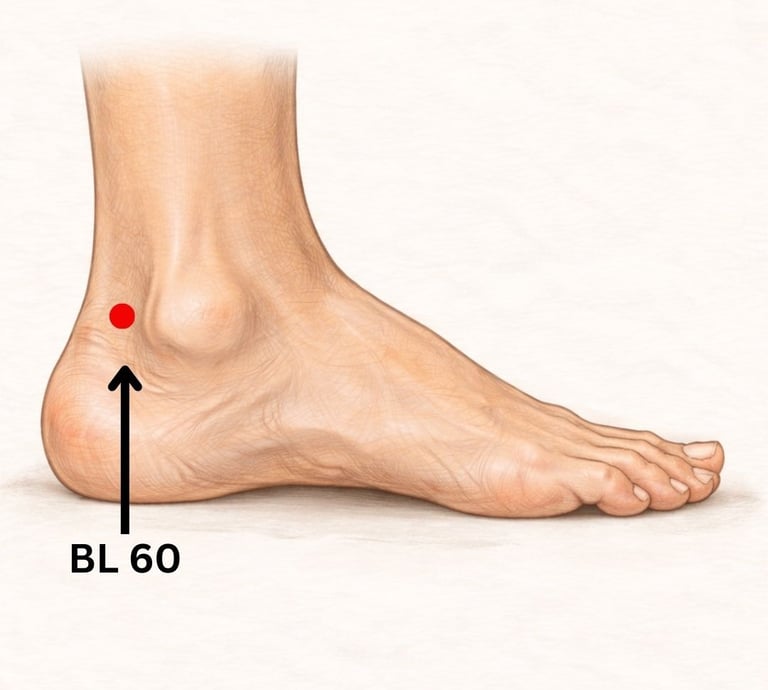
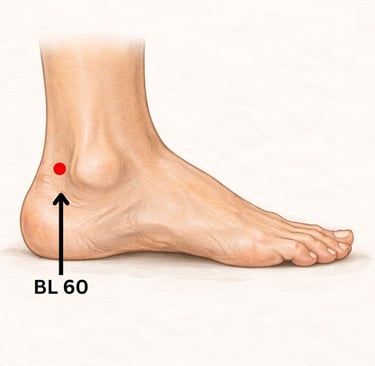
Bladder 60 (Kunlun - "Kunlun Mountain")
Located in the depression between the outer ankle bone and the Achilles tendon.
The name of this point - Kunlun - is a reference to a mountain range in Western China, where the emperor would go to talk to deity on behalf of his people. This point references after talking, when he comes down from the heights, returns to earth, and prepares for rest. I used this point to help me come down from my daily "mountains" of activity and stress so I can actually sleep.
I love to press this point on myself, or ask my husband for a foot massage before bed. Light, circular pressure for about a minute on each side. It signals to my nervous system that the day is over and it's time to rest.
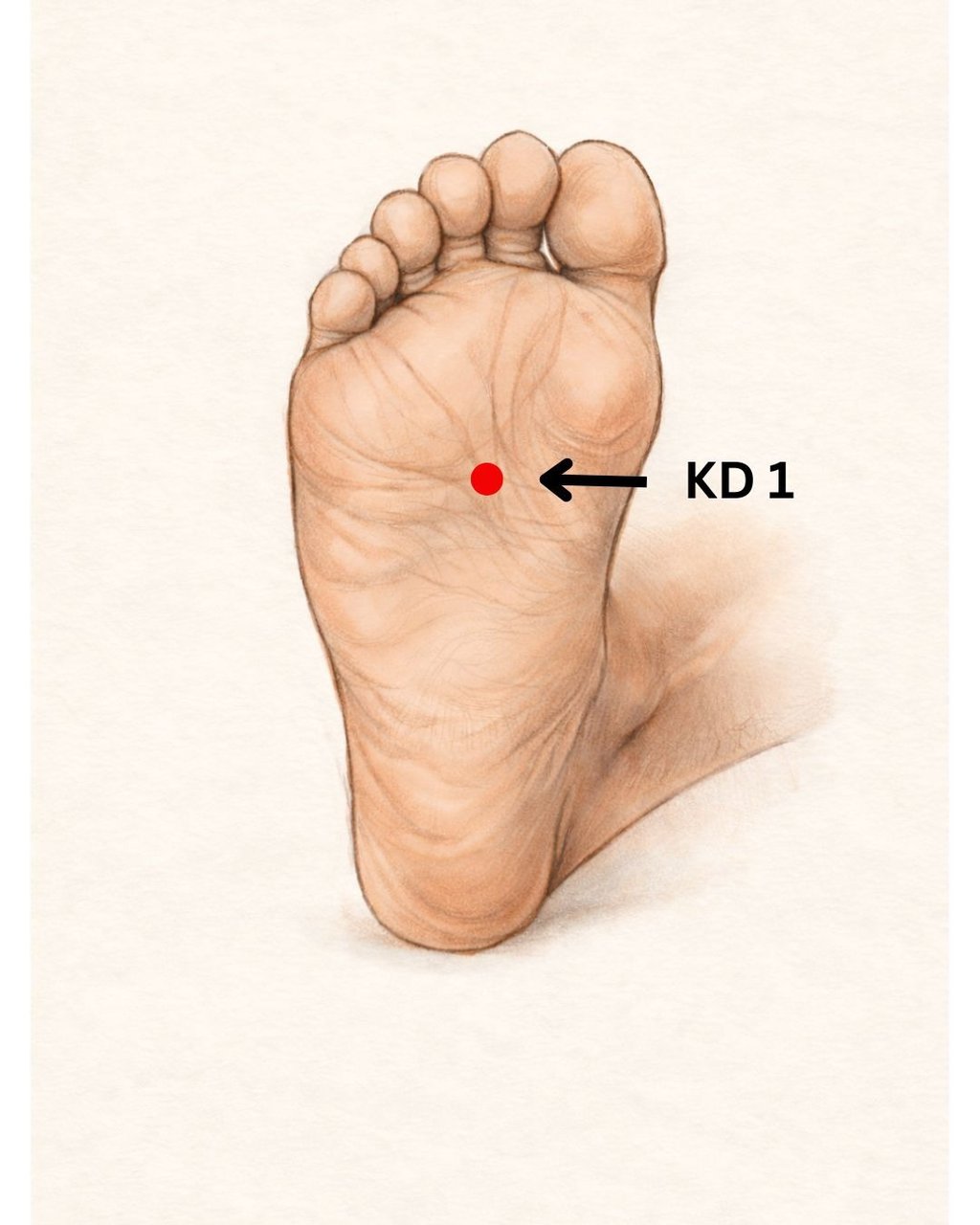
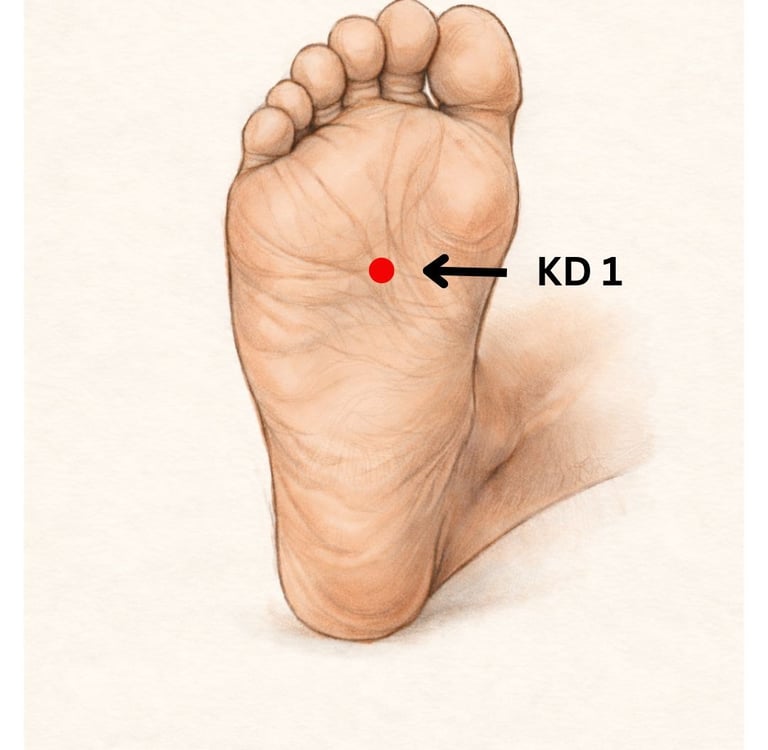
Kidney 1 (Yongquan - "Gushing Spring")
Located on the sole of the foot, about one-third of the way down from the toes, in the depression that forms when you curl the toes.
This is probably the single most grounding point on the body. When you feel scattered, anxious, overwhelmed, or like your energy is all up in your head, press this point firmly or massage the general area.
I do this on myself before bed when I can't turn my mind off. I do it on my kids when they're wound up and can't settle. I recently started using it for my daughter crying in her carseat during drives. You can press it through socks if you want—the pressure still works.
© 2026. All rights reserved.

Find Me
Email: contact@sashadewsnup.com
Phone: 503-498-5665
Address: 1561 Columbia Blvd, St Helens, OR
Hours: Thursday and Friday, 9 AM to 4 PM
Cash-pay - Superbills available
Credentialing: Moda & BCBS
Sasha Dewsnup, DAaCHM, LAc, CTRS, CCLS
Chinese medicine for nervous system regulation, maternal recovery, and structural pain — serving St. Helens and the Columbia River Valley.