
Deep Winter Wellness Part 3: Nourishing Your Kidney Energy
Get specific foods, acupressure points you can use at home, and lifestyle practices to rebuild your deepest energetic reserves this winter.
Admin
1/11/20269 min read


This is Part 3 of the Deep Winter Wellness series. Catch up: Part 1 - Understanding Winter in Chinese Medicine | Part 2 - The Power of Quiet Time
“This section contains affiliate links, which means I may earn a small commission if you make a purchase — at no extra cost to you. I only recommend products I personally use or trust.”
I’ve had people ask me: "If the Kidneys are so important, why don't I just take a supplement?"
It's a fair question in our quick-fix culture. But here's the truth about building Kidney energy: you can't shortcut it. Jing—that deep constitutional energy stored in the Kidneys—is replenished through the slow, steady practices of nourishment. Through food. Through warmth. Through rest. Through caring for your body like the precious vessel it is.
The good news? These practices are deeply satisfying. There's something soul-level nourishing about a bowl of bone broth on a cold evening, about pressing your fingers into an acupuncture point and feeling your whole body respond, about going to bed early wrapped in warmth.
Today, we're diving into the second pillar of winter wellness: practical ways to nourish your Kidney energy through what you eat, acupressure you can do at home, and lifestyle practices that build reserves instead of depleting them.
Dietary Therapy for Kidney Health
In Chinese Medicine, food is medicine. Not in some abstract, someday kind of way—but right now, in your kitchen, three times a day. The foods you choose either support or tax your Kidney energy, and winter is the time to choose wisely.
The Principle of Color
One of the simplest guidelines in Chinese dietary therapy is this: dark-colored foods nourish the Kidneys. This isn't superstition—these foods tend to be mineral-dense and nutrient-rich in ways that support the deep restoration the Kidney system needs.
Dark foods to emphasize:
Black beans (my personal favorite)
Black sesame seeds (toast them and sprinkle on everything)
Blackberries and blueberries
Black rice (also called forbidden rice—gorgeous and nutty)
Dark leafy greens like kale and chard
Seaweeds: nori, wakame, kombu
Ideally, I start my winter mornings with congee made from black rice, topped with toasted black sesame seeds, walnuts, and a drizzle of honey. It's warm, grounding, and deeply nourishing to Kidney energy. Recipe is in my free Winter Wellness Guide if you want to try it.
Root Down: The Wisdom of Root Vegetables
Winter is root vegetable season for a reason. These vegetables grow downward, storing energy deep in the earth. They help our energy do the same—drawing it down and in, supporting the Kidney's function of storage and conservation.
Stock up on:
Beets (roast a big batch on Sunday)
Turnips
Parsnips
Sweet potatoes
Carrots
Rutabaga
Roast them with olive oil and warming spices, add them to soups and stews, mash them as a side dish. The key is to cook them—winter is not the season for raw food.
Bone Broth: Liquid Medicine
If there's one food I could convince everyone to make this winter, it's bone broth. In Chinese Medicine, we say "like treats like"—bone broth literally supports your bones and bone marrow, which are governed by the Kidneys.
A good bone broth is rich in minerals, collagen, and gelatin. It's warming, easy to digest, and deeply nourishing. I make a big pot every week and use it as a base for soups, to cook grains, or just to sip from a mug in the afternoon.
My favorite is chicken bone broth—bonus if collagen-rich feet or other chicken organs are in the broth. I use this large crock pot, cook it overnight (10 hours), and wake to find a pot of delicious broth for the week. If you don't want to make your own, Kettle & Fire makes an excellent organic bone broth, though homemade is always best.
Warming Spices
These spices help tonify Kidney yang—the warming, active aspect of Kidney energy:
Fresh ginger (I add it to everything)
Cinnamon
Cloves
Fennel seeds
Black pepper
Add them to your morning oatmeal, your afternoon tea, your evening soup. They help your digestive system stay strong in the cold months and support the Kidney's warming function.
I learned from a friend that if you make a tincture or extract of fennel, you can use it to make what I call fennel-doodle cookies. My husband doesn’t like the black licorice flavor of fennel, but loves these cookies! Find the recipe in the Winter Wellness Guide.
Healthy Fats and Nuts
The Kidneys need good fats to function optimally. Emphasize:
Walnuts (the kidney-shaped nut nourishes the Kidneys—nature's sign!)
Chestnuts (warming and sweet)
Sesame oil
Grass-fed butter or ghee
Coconut oil for cooking
Growing up, my mom would keep roasted walnuts readily accessible for the family to eat throughout the day. Simple, satisfying, nourishing.
The Salty Flavor
In Five Element theory, the salty flavor directs energy to the Kidneys. This doesn't mean loading up on table salt—it means using good quality sea salt in moderation and incorporating naturally salty foods like:
Sea vegetables (nori, wakame, dulse)
Miso (I have miso soup several times a week)
Naturally fermented pickles
Good quality soy sauce or tamari
When table salt is needed, I love this high-quality Real Salt.
What to Emphasize
Make your winter meals:
Cooked, not raw – Your digestive fire is lower in winter. Save the salads for summer.
Warm or hot – Even your water should be room temperature or warm. Cold beverages tax your Kidney yang.
Slow-cooked – Stews, soups, congees, roasted dishes. Foods that have been cooked long and slow are easier to digest and more nourishing.
Eaten mindfully – Sit down. Chew thoroughly. Let your body recognize it's being fed.
Start your day warm: A bowl of oatmeal with walnuts, cinnamon, and a drizzle of honey. Or congee with black sesame. Or eggs with roasted sweet potatoes. Not a smoothie (too cold) or granola (too hard to digest).
What to Reduce
Cold, raw foods that tax your digestive fire
Excessive caffeine that depletes Kidney energy (I know, I know—but if you're constantly exhausted, this might be part of why)
Refined sugar and processed foods that spike and crash your energy
Cold water from the fridge—please, warm or room temperature
Acupressure Points for Self-Care
One of my favorite things about Chinese Medicine is that you have powerful healing tools literally at your fingertips (and on your fingertips too!). These acupuncture points can be stimulated with simple finger pressure—no needles required.
I recommend spending 3-5 minutes on each point, either daily or several times a week. Use firm but comfortable pressure, and breathe deeply as you hold each point.
Lifestyle Practices
Beyond food and acupressure, there are daily practices that either support or deplete Kidney energy. Winter is the time to be intentional about these.
Keep Your Kidneys Warm
This is so simple but so important. In Chinese Medicine, we say that cold can directly invade the Kidney system, especially through certain vulnerable points.
Protect these areas:
Lower back – Wear an extra layer that covers your lower back when you go outside. I wear a long undershirt even under sweaters.
Feet – Always wear socks. Cold feet directly impact Kidney energy. Get some good wool socks and actually wear them.
Back of neck – There's an acupuncture point called Feng Men ("Wind Gate") at the back of your neck that's particularly susceptible to cold and wind. If this point gets cold, you're more likely to get sick. Wear a scarf outside in the cold.
Warming practices:
Take warm foot soaks before bed—add Epsom salt and thinly sliced fresh ginger. Soak for 15-20 minutes. This is pure medicine.
Use a heating pad on your lower back while you read or watch TV in the evening
Sleep in warm socks if your feet get cold at night
Take warm (not hot) baths with Epsom salt
Herbal Support
While I always recommend working with a practitioner for personalized herbal formulas, there are some gentle herbs you can incorporate on your own:
Adaptogenic herbs that support Kidney energy:
Ashwagandha
He shou wu (fo-ti)
Rehmannia
These are available in many adaptogenic blends. I like Four Sigmatic's reishi hot chocolate as an evening treat—reishi is deeply calming to the nervous system and supports Kidney yin.
Warming teas:
Fresh ginger tea (Slice fresh ginger, boil for 5 to 10 minutes, add honey. If it is too strong, I like to add a few onion slices - either from a white or yellow onion or scallions, whichever is on hand. The onions don’t add any flavor, but dull the intense spicy flavor of the ginger while adding extra vitamins to the brew.)
Cinnamon tea
Roasted dandelion root "coffee" (supports Kidney and Liver)
Conserve Your Energy
This is perhaps the most countercultural advice, but it's crucial: winter is not the season to push yourself physically.
Exercise wisely:
Choose moderate, gentle forms of exercise: walking, yin yoga, tai chi, gentle swimming in a heated pool
Avoid excessive sweating—sweat carries Kidney yang out of the body and indicates skin pores that are open for wind cold invasion
If you do more vigorous exercise, do less of it during winter months
Listen to your body—if you're exhausted, rest instead of pushing through a workout
Sleep generously:
Aim for bed before 11 PM when possible
The hours before midnight count double for restoration
If you wake in the night, don't look at screens—practice gentle breathing or acupressure instead
Bringing It All Together
You don't have to do everything on this list. In fact, please don't try to. Start with what calls to you:
Maybe it's making bone broth this weekend and eating more roasted root vegetables. Maybe it's learning to massage Kidney 1 before bed. Maybe it's finally buying those wool socks and actually keeping your feet warm.
Choose 2-3 practices from today's article and commit to them for the next two weeks. Notice how you feel. Notice your energy, your anxiety levels, your sleep quality, your sense of being grounded in your body.
Small, consistent practices compound. This is Water element wisdom—slow, steady, patient nourishment that slowly shapes everything it touches.
Resources to Support Your Practice
Stock your kitchen: Here are my top Amazon picks for winter wellness:
Large crock pot for bone broth
Organic bone broth (if you don't want to make your own)
In Part 4, we'll complete the winter wellness trinity with the third pillar: planning and intention setting. We'll explore how to use winter's reflective energy for strategic planning that actually works, combining Chinese Medicine wisdom about Zhi (willpower) with timing research from author Dan Pink.
What practice from today are you most excited to try? Let me know in the comments!
Stay warm, eat well, and remember—nourishment is a practice, not a destination.
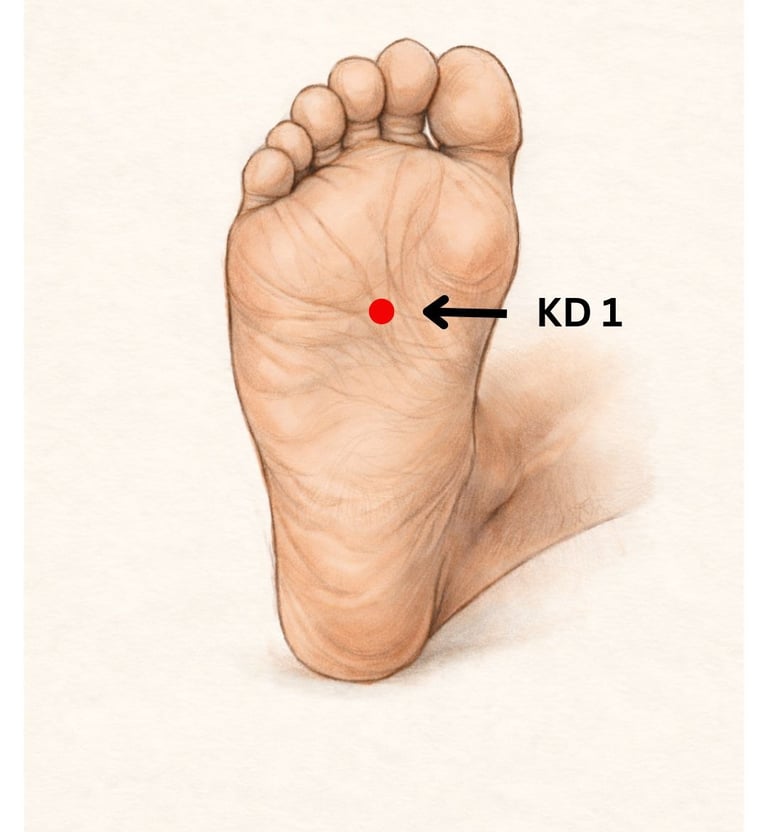
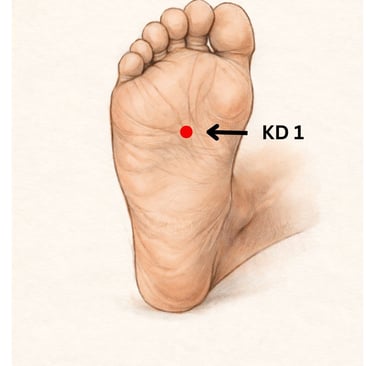
Kidney 1 (Yongquan - "Bubbling Spring")
Location: On the bottom of your foot, in the depression that appears when you curl your toes, about one-third of the way from the base of your toes to your heel.
Why it matters: This point is where Kidney energy bubbles up like a spring. Massaging it helps ground your energy, calm anxiety, and improve sleep. It literally connects you to the earth element's stability.
How to use it: Sit comfortably and place one foot across your opposite knee. Use your thumb to apply firm pressure in a circular motion for 3-5 minutes. Then switch feet. Do this before bed for better sleep.
I love this wooden foot roller while sitting and working—it hits Kidney 1 perfectly and feels amazing.
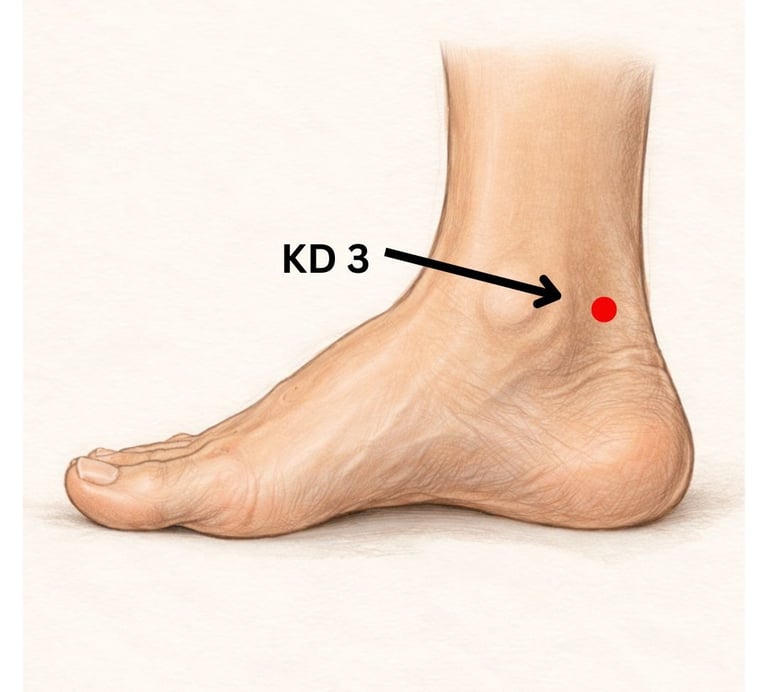
Kidney 3 (Taixi)
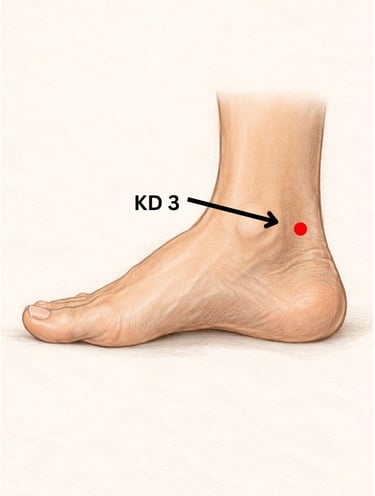
Location: On the inside of your ankle, in the depression between your ankle bone and Achilles tendon.
Why it matters: This is one of the most important points for tonifying both Kidney yin and yang. It helps with fatigue, lower back pain, anxiety, and supports reproductive health.
How to use it: Use your thumb or fingers to press into this point with firm, steady pressure for 3-5 minutes on each side. You can do this while sitting on the couch in the evening.
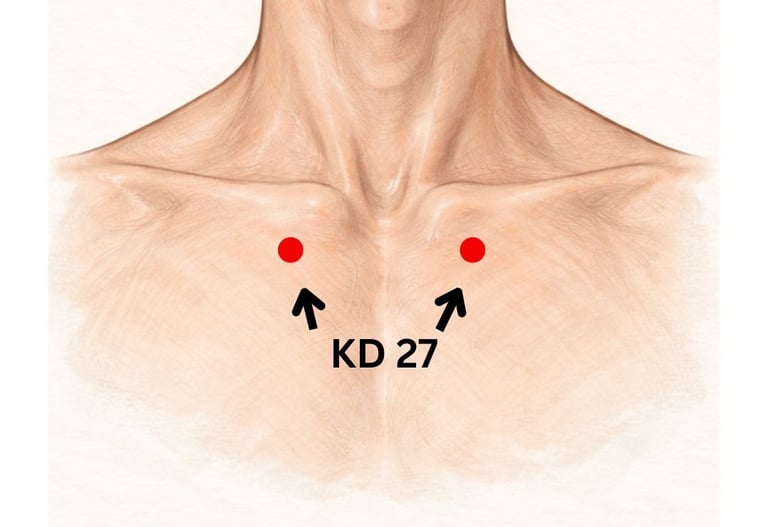
Kidney 27 (Shufu)
Location: On your chest, just below the collarbone, about one thumb-width from the centerline of your body.
Why it matters: This point opens the chest, helps with breathing difficulties, and connects the Kidney channel to the upper body. Great for anxiety and feeling stuck.
How to use it: Use your fingertips to apply gentle but firm pressure to both points simultaneously. Hold for 2-3 minutes while breathing deeply.
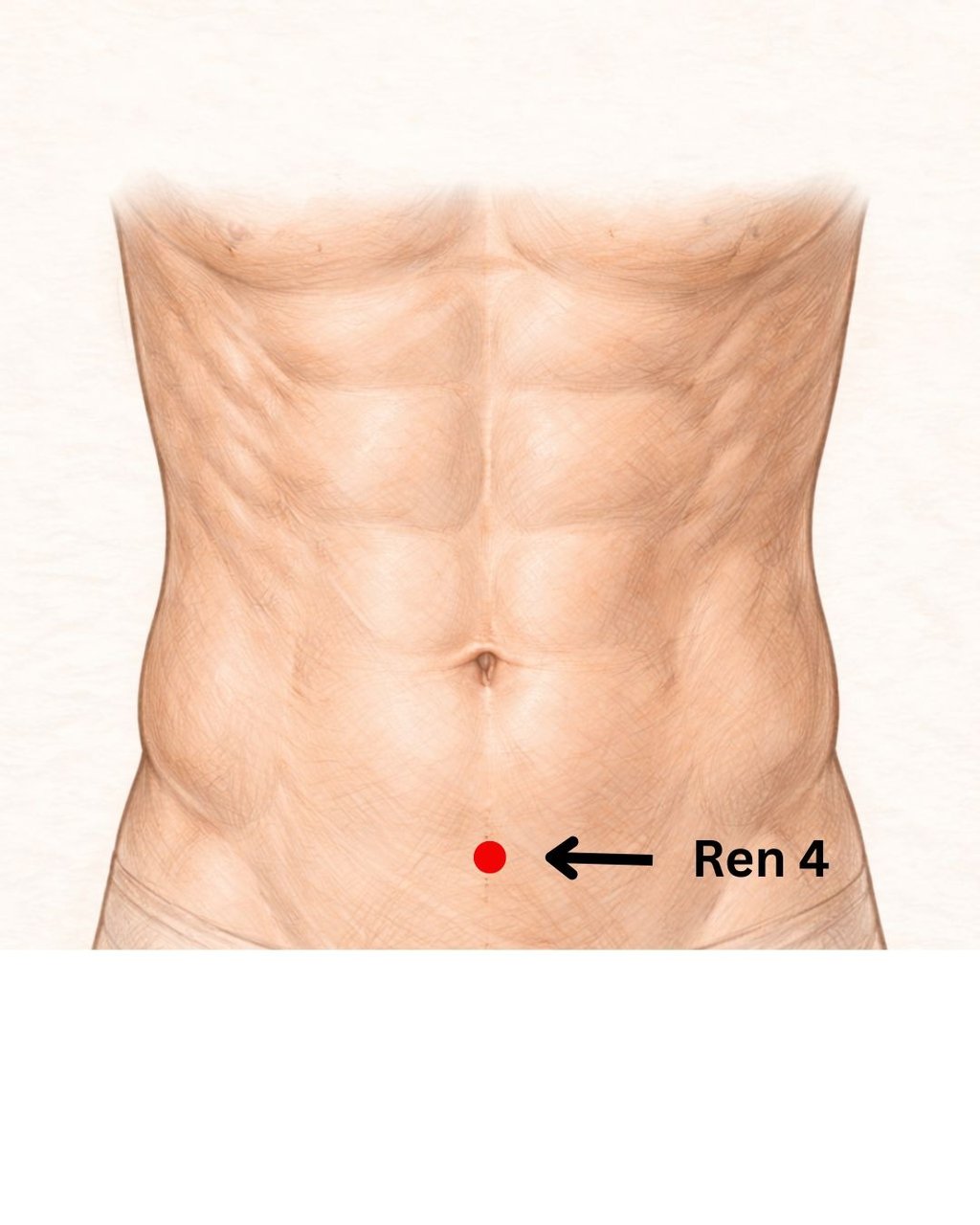
Ren 4 (Guanyuan - "Gate of Original Qi")
Location: On your lower abdomen, about three thumb-widths (roughly 2 inches) below your belly button.
Why it matters: This point builds your original Qi—your constitutional energy. It's deeply restorative for Kidney Jing.
How to use it: Lie down and place your palm over this area with gentle, warm pressure. You can also use a heating pad here. Hold for 10-15 minutes while breathing deeply into your lower belly.
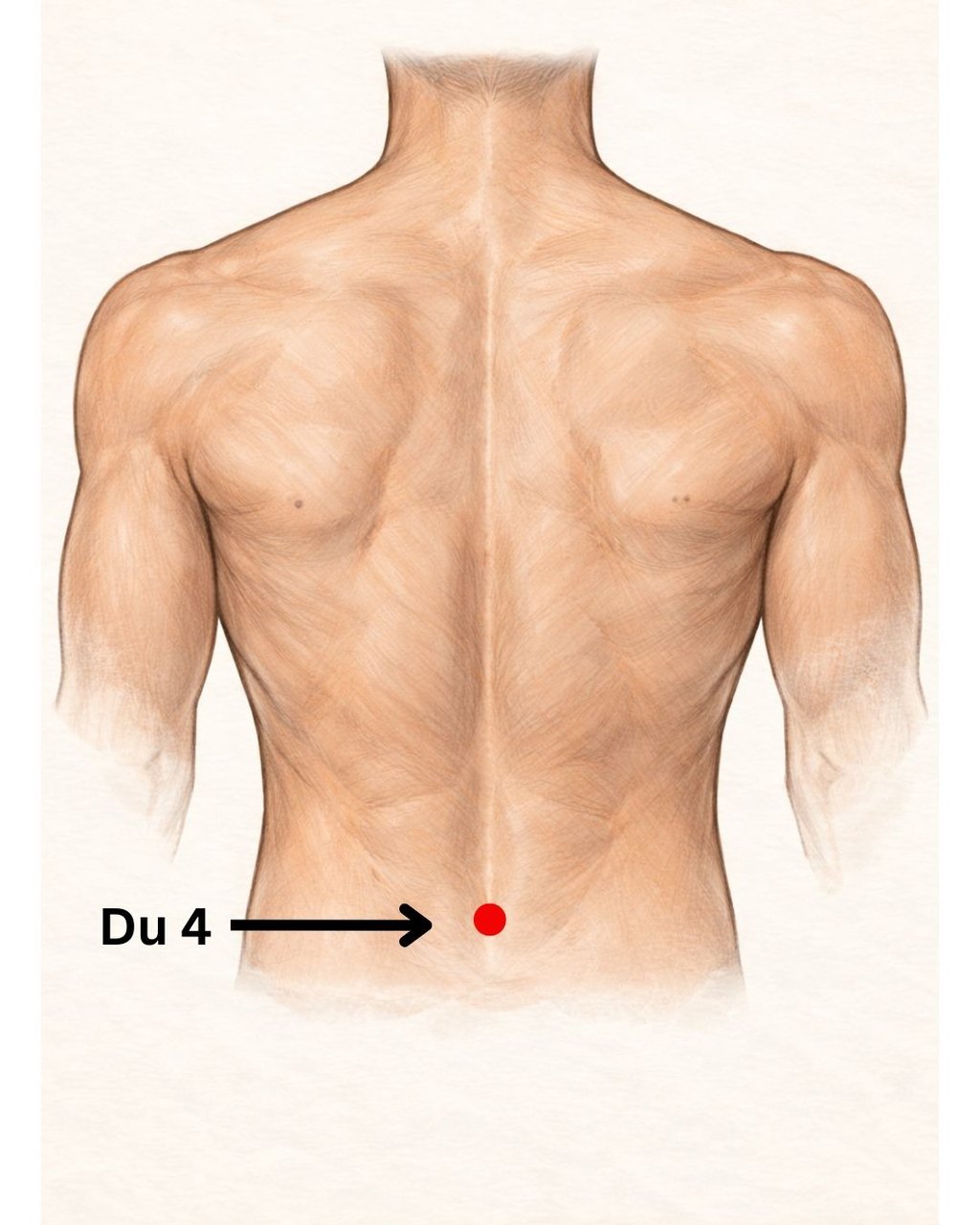
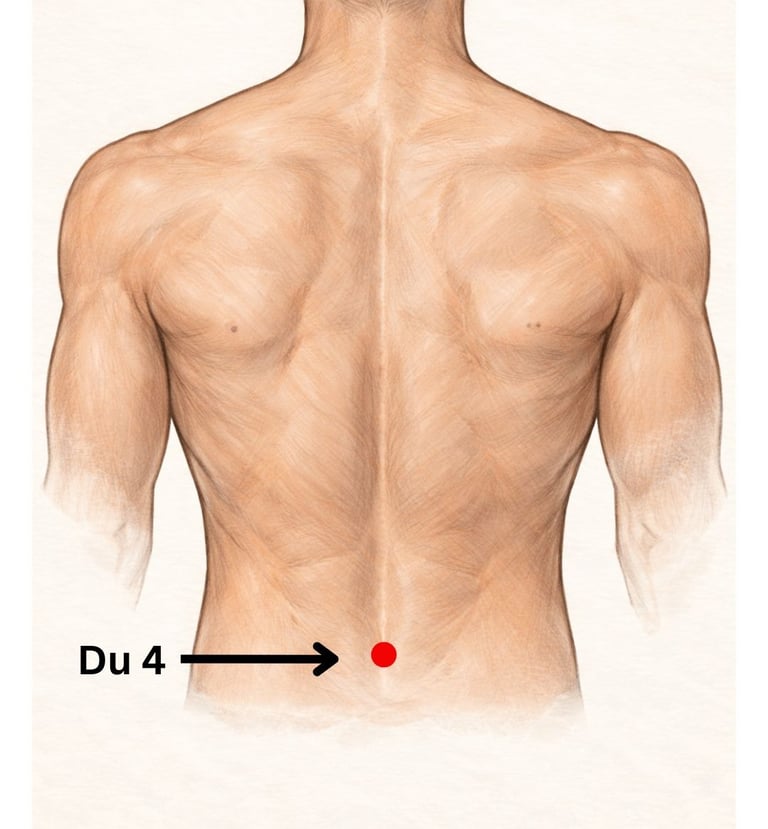
Du 4 (Mingmen - "Gate of Life")
Location: On your lower back, directly behind your belly button, between the second and third lumbar vertebrae.
Why it matters: This point tonifies Kidney yang—the warming, active energy. It's excellent for lower back pain, fatigue, and feeling cold.
How to use it: This one is best done with a heating pad or hot water bottle. Lie on your stomach or sit with heat applied to your lower back for 15-20 minutes. You can also have a partner apply firm pressure here.
I love this rechargeable heating pad because it has different heat settings and an auto-shutoff for safety.
© 2026. All rights reserved.


Find Me
Email: contact@sashadewsnup.com
Phone: 503-498-5665
Address: 1561 Columbia Blvd, St Helens, OR
Hours: Thursday and Friday, 9 AM to 4 PM
Cash-pay - Superbills available
Credentialing: Moda & BCBS
Sasha Dewsnup, DAaCHM, LAc, CTRS, CCLS
Chinese medicine for nervous system regulation, maternal recovery, and structural pain — serving St. Helens and the Columbia River Valley.